USDT on TRC20, ERC20, BEP20 or TON: how to choose and move between networks
USDT exists on eight networks at once, and none of them is directly compatible with another. Here's what actually differs between them and how to move tokens between TRC20, ERC20, BEP20 and TON.
Contents
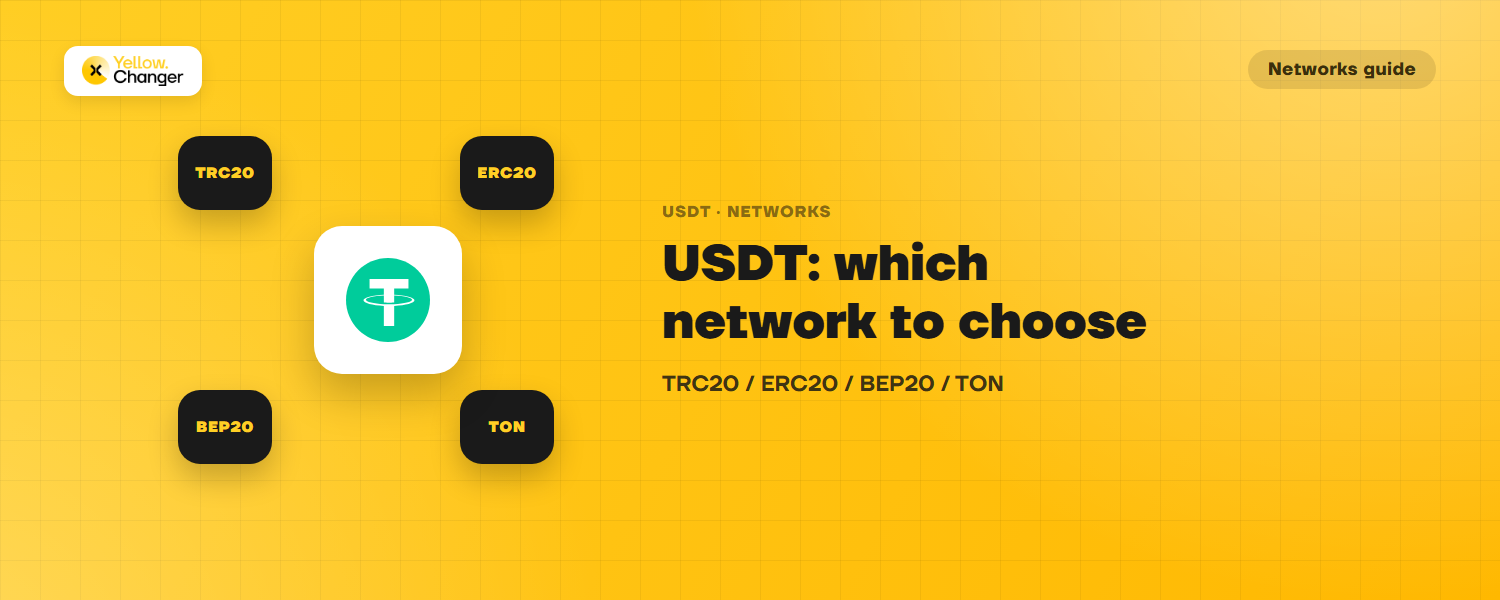
USDT lives on several networks at once, and an address from one network is physically meaningless on another. You can send tokens on eight of them — TRC20, ERC20, BEP20, TON, Solana, Polygon, Arbitrum and Avalanche — and receive on those same eight plus NEAR and Optimism. The set of networks changes over time, so the current list is always in the exchange form. If you need to move tokens from, say, TRC20 to BEP20 or TON, the only way that works is an exchange: sell USDT on one network, buy it back on the other.
#Why there are so many networks, and where the confusion comes from
USDT isn't a blockchain of its own. Tether issues the token on top of other networks, so TRC20-USDT and ERC20-USDT are technically different tokens sharing a ticker: they trade one-to-one only because the same Tether reserve backs both.
The mix-up is usually not a beginner mistake — it's that different platforms hand out different default addresses. One exchange withdraws as TRC20 because the network fee is lower; another service expects a deposit strictly on BEP20 or TON, and the wallet the first platform gave you simply doesn't work there.
#How long crediting takes on each network
To credit a deposit, YellowChanger waits for a different number of network confirmations. The threshold tracks the architecture and history of each blockchain: the cheaper a short chain of blocks is to rewrite, the longer the wait.
- TON — 1 confirmation
- BEP20 — 5 confirmations
- ERC20 — 6 confirmations
- TRC20 — 20 confirmations
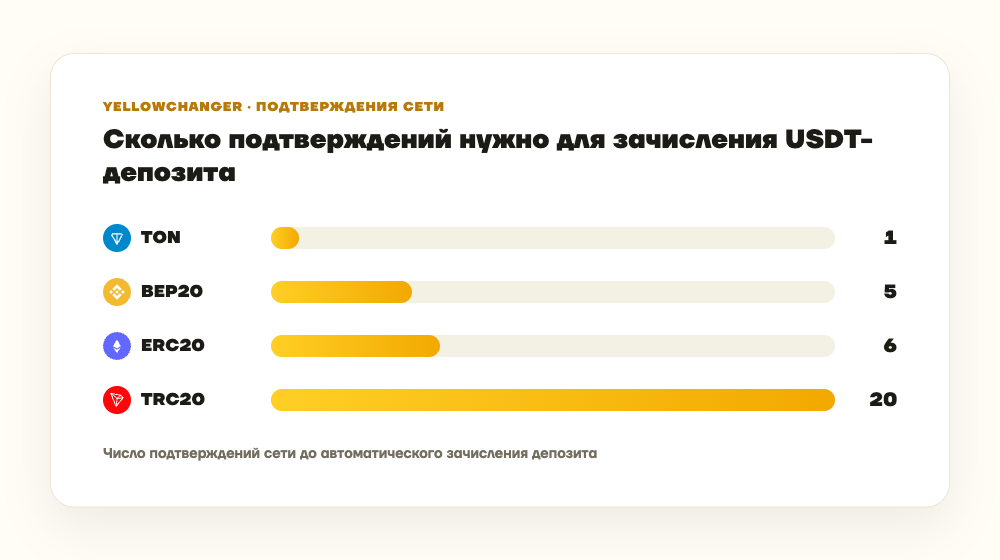
TON and TRC20 differ by a factor of twenty. Tron produces blocks quickly, but a short chain there is cheaper to rewrite, which is why the crediting threshold sits higher.
#How to move USDT between networks on YellowChanger
The mechanics are the same as any other exchange: pick the pair you need, say USDT (TRC20) → USDT (BEP20) or USDT (TRC20) → USDT (TON), enter the receiving address on the target network, and send the deposit. For the reverse direction — moving tokens from TON to BEP20, for instance — use the USDT (TON) → USDT (BEP20) pair.
In "Yellow" mode the rate is locked for 10 minutes from when the request is created. "Green" mode runs on a floating rate with a fee from 0.6% at the base level, dropping through the loyalty programme to 0.2% at higher monthly volume. No identity verification is required: instead of KYC the sending address is checked automatically, which is covered in a separate article.
#FAQ
#Which USDT network is fastest?
By the number of confirmations YellowChanger waits for before crediting a deposit — TON, with just one, versus 20 for TRC20 and 6 for ERC20.
#Can I send USDT from TRC20 straight to a BEP20 or TON address?
No, the networks are physically incompatible at the address-format level, and sending directly would lose the funds. You need an exchange that accepts a deposit on one network and pays out on the other.
#Which USDT network has lower transfer fees?
YellowChanger doesn't set the network fee — it depends on how busy that specific blockchain is at the time. TRC20 tends to be cheaper to send on most platforms than ERC20, which is why it's often the default.
#Is verification required to move funds between networks?
No, no KYC is needed. Only the sending address is checked under the AML policy.
#What happens if I send to the wrong network by mistake?
The service never sees that transaction, so it can't credit it — the tokens sit on a blockchain address they were never meant to reach, and recovering them (if possible at all) has to be done manually. Double-check that the network in your wallet matches the network in the exchange details before sending.